Article: How to care for shawls and scarves: from everyday wear to storage
How to care for shawls and scarves: from everyday wear to storage
Your favourite shawl often stays with you from the moment you leave in the morning until you return in the evening. A scarf touches your skin, collar and jewellery and, once removed, may be hurriedly placed in a handbag. Care begins in these everyday moments: gently untying the knot, putting the piece away properly and checking the instructions before cleaning.
Not every shawl can be washed in the same way. This guide helps you organise the most important decisions, but the instructions for the individual product always take priority.
1. Keep the care-label information
Check the composition and the symbols for washing, drying, ironing and professional cleaning. A crossed-out wash tub means that washing in water — including hand washing — is not allowed. Selecting a low temperature does not change this rule. The instructions apply to the whole item, including its finish, rather than only to the main fibre.
If you want to remove the sewn-in label, first take a clear photograph of both sides. You can keep these photographs in a single album on your phone. The next time you clean the item, you will not have to guess the instructions from the appearance of the fabric.
2. After wearing, untie, inspect and put away
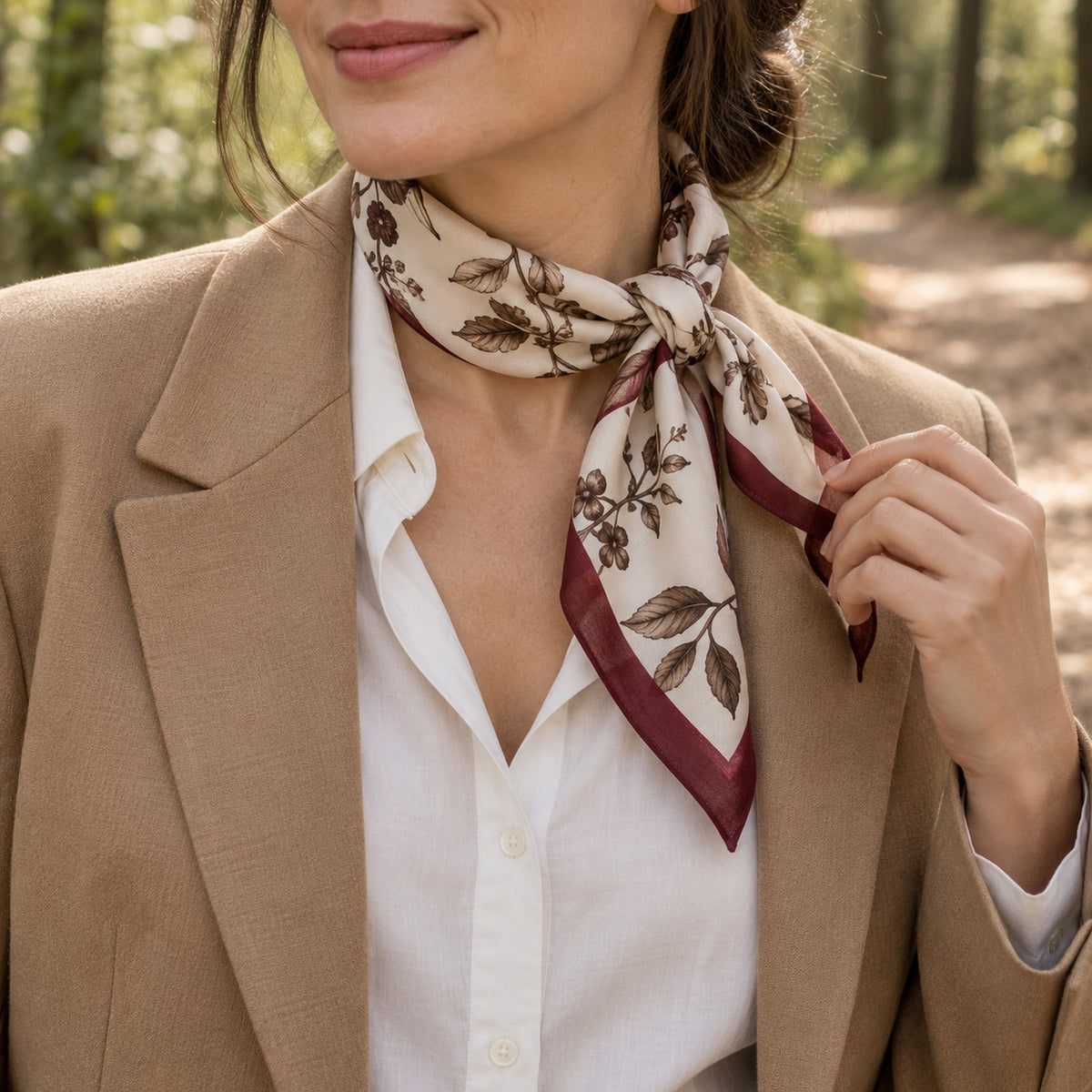
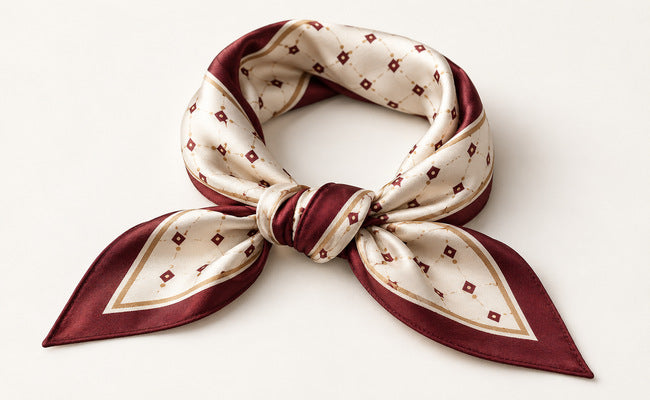
Do not leave a square scarf tied in a tight knot for a long time. Loosen it and unfold the fabric, checking the area around the collar and the edges. Make sure the accessory is dry before putting it away. It is also worth checking the jewellery and zips it comes into contact with while worn: a protruding element can snag a delicate fabric.
With wool, not every wear requires washing. Assess any odour and visible marks rather than automatically cleaning the shawl after each use.
3. Washing wool and cashmere: only as permitted
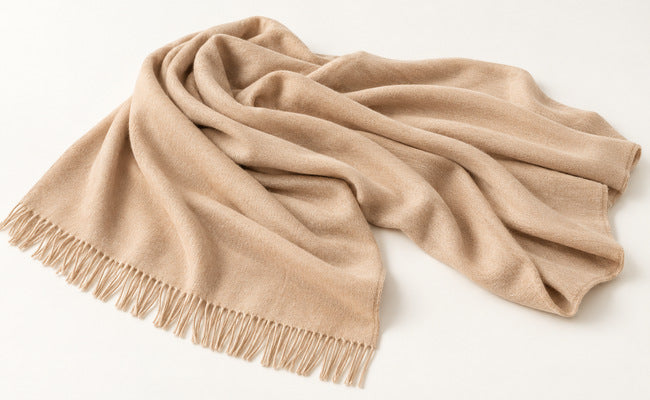
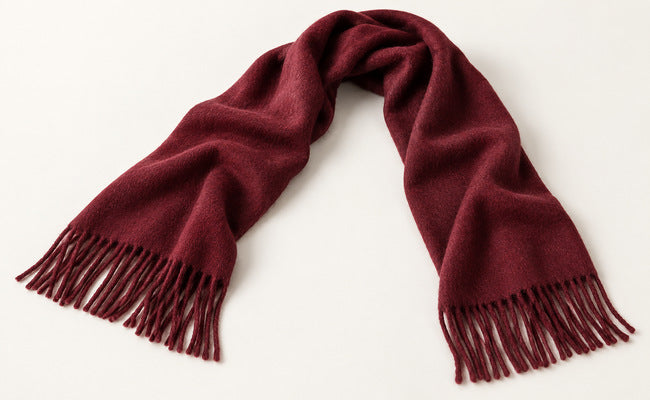
If the label on a wool shawl permits machine washing, choose the programme and temperature specified by the manufacturer. Use a detergent intended for the particular fibre. When hand washing is permitted, handle the material gently without vigorous rubbing or wringing.
For cashmere, check the instructions for the individual style as well. Do not automatically use the settings for a wool jumper on a cashmere scarf. If the manufacturer specifies professional cleaning only, choose a dry cleaner and show them the label.
4. A silk scarf has its own care requirements
Do not assume that hand washing is always suitable for a silk scarf. First read the instructions for that particular style. If washing in water is permitted, follow the stated temperature and method; if it is prohibited, do not try to replace it with a brief soak.
This also applies to scarves described as satin. Satin does not identify a single fibre composition, so two similarly shiny accessories may require different treatment. If the label and the product description are unclear, ask the seller for guidance before cleaning.
5. Drying is just as important as washing
Woolmark recommends drying many wool products flat, especially knitwear, while gently reshaping them. Avoid direct sunlight and hot radiators. Follow the label when choosing a drying method: not all woven and knitted items require identical treatment.
For a silk scarf or a blended-fibre shawl, use the method specified by the manufacturer. Allow enough time before you plan to wear it — being in a hurry is not a good reason to increase the drying or ironing temperature.
6. Pilling and stains: do not use force
Small balls can form on the surface of wool through friction. Their appearance alone is not enough to judge the quality of the item. Do not pull them off roughly; choose a removal method suited to the fabric and the manufacturer's guidance. A comb or fabric shaver must be used with care, especially on fine material.
If there is a stain, note what caused it. This information will help you choose a cleaning method. Do not apply several household remedies one after another, and do not test a stain remover on a visible area of the scarf. With a delicate, patterned accessory, it is wiser to consult a professional cleaner and provide the composition and care instructions.
7. Storage between seasons
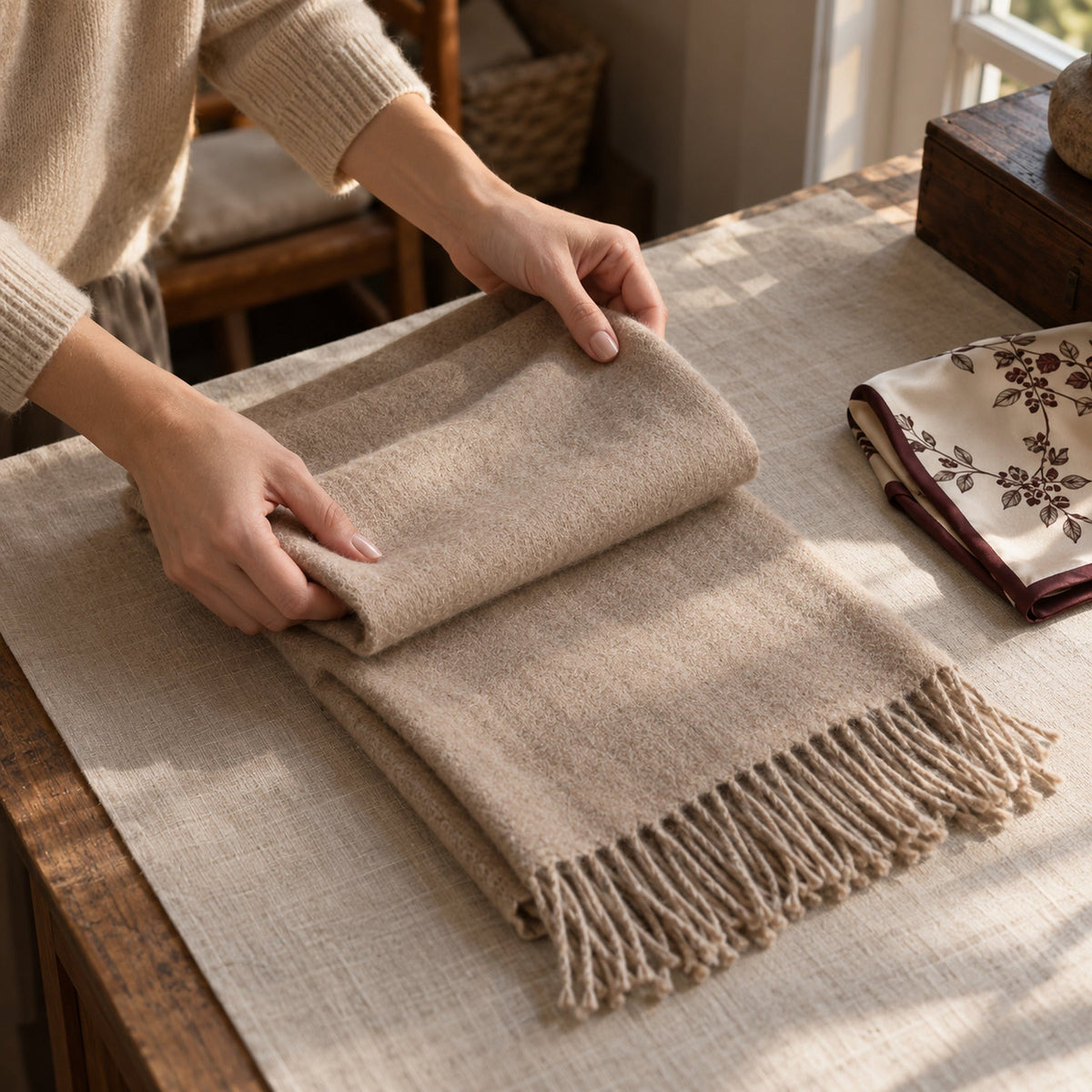
Before storing a wool shawl for a longer period, make sure it is clean and completely dry. Fold it with a little room and periodically check the drawer or box. Woolmark recommends folding wool items and checking for moisture or insects.
Arrange scarves so their colours are easy to see. Keep them separate from belts with buckles and from jewellery. You can dedicate one compartment to small neck scarves and stack larger squares loosely. An organised drawer makes it easier to take out the right accessory without pulling on a corner.
A small ritual that makes care easier
After removing it, untie your scarf. Check the label before cleaning. Make sure the material is dry before putting it away. These three habits help prevent hasty decisions and let you get to know the accessories you wear more closely.
Discover UniqueYou shawls and scarves. When choosing your next style, consider not only its colour and texture but also whether its care requirements suit your everyday routine.